Marion Naipei now calls Pastor Kanyari daddy😂😂😂😂😂 pic.twitter.com/J1UiZJBTR8
— Miss_Preety (@Misspreety17) February 7, 2026

PASTOR KANYARI TRENDING LIVE WITH MARION NAIPEI
February 7, 2026

Raising children in extended families is a beautiful part of many cultures around the world. Cousins often grow up like siblings, sharing homes, meals, playtime, and memories. However, when cousins of different genders are raised closely together—especially during adolescence—it becomes important for caregivers to create clear boundaries that promote respect, safety, and healthy development.
This is not about fear or suspicion, but about guidance, structure, and responsible parenting.
Children should grow up understanding what family means. From a young age, explain that cousins are family members and deserve the same respect, dignity, and care as brothers and sisters. When children understand family roles clearly, healthy behavior becomes natural.
Create an environment where children feel comfortable talking to parents, guardians, or elders. When children can ask questions and express feelings without fear or shame, they are less likely to act in secrecy or confusion. Honest, age-appropriate conversations are key.
As children approach their teenage years, privacy becomes important. Simple steps such as:
These small actions teach boundaries and self-respect without making children feel policed or mistrusted.
Children don’t need to be watched every second, but caregivers should stay engaged. Know who children spend time with, what activities they’re involved in, and how they interact. Active parenting means being present—not invasive.
House rules help children feel safe and guided. These can include:
Rules should be explained calmly and applied fairly, not as punishment but as structure.
Encourage cousins to spend time together in group settings—family games, chores, outings, or community events. Group interaction reduces isolation and reinforces a sense of collective responsibility and togetherness.
Children learn most from what they see. When adults model respect, healthy relationships, and good boundaries, children naturally follow. The home environment should reflect the values you want children to grow into.
If a caregiver feels unsure or notices concerning behavior, it’s okay to seek advice—from counselors, elders, or child-development professionals. Asking for help is a sign of responsible parenting, not failure.
Raising cousins of different genders under one roof can be a positive and enriching experience when done with care, wisdom, and clear boundaries. With open communication, respect for privacy, and strong family values, children can grow up feeling safe, confident, and emotionally healthy.
Strong families are built not by fear—but by guidance, love, and intentional parenting.

Today we want to celebrate something truly special — the power of community and compassion.
A video that went viral on X (formerly Twitter) showed a moment that touched the hearts of many: a group of men stepped forward to make sure that a woman was not separated from her young child when authorities attempted to take her away. Instead of watching from the sidelines, these men stood up, spoke up, and made sure dignity and care were upheld.
It wasn’t about attention or praise. It was about protecting a child and making sure a mother did not have to leave her little one alone in a difficult moment. That simple act of humanity reminded countless people that kindness still matters — and that in trying times, ordinary citizens can do extraordinary things.
In a world where so much content can feel negative or divisive, this was a reminder of something important: we are stronger when we look out for each other. The courage shown by the men who intervened wasn’t about breaking rules — it was about holding on to our sense of community and empathy.
So to the men who stood up — thank you.
To the woman and her child — we see you.
To everyone who shared this moment — let’s continue to spread compassion and understanding.
📌 Let this be a reminder:
Respect for human dignity and care for one another are values worth protecting.
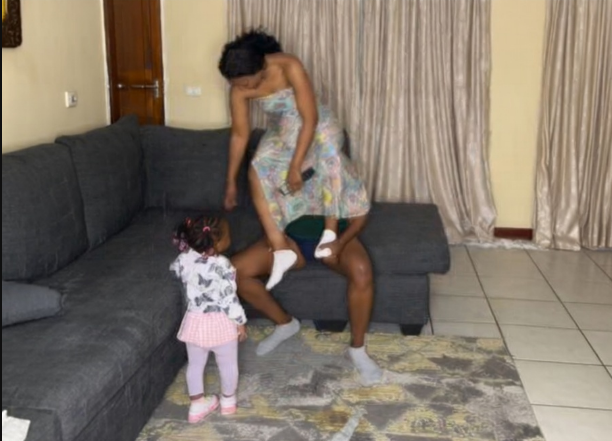
Living in a single room with children is a reality for many families. Whether driven by financial challenges, housing shortages, or temporary circumstances, sharing a small space can be emotionally and physically demanding. However, with thoughtful planning, clear boundaries, and mutual respect, families can create a healthy and dignified living environment—even in limited space.
Routine helps everyone know what to expect. Set specific times for sleeping, studying, meals, and play. When children understand structure, they are less likely to feel overwhelmed or anxious in a shared space. Consistent schedules also help adults plan moments of privacy and rest.
Even one room can be divided into zones. Use curtains, shelves, wardrobes, or screens to create visual boundaries. One corner can be designated for sleeping, another for studying or play. These simple divisions help children understand personal space and foster a sense of independence.
As children grow older, their need for privacy increases. Parents should be mindful of changing clothes, personal conversations, and quiet moments. Teaching children to knock, turn away, or step outside briefly when necessary builds respect and healthy boundaries.
Honest conversations help prevent tension. Talk to children about shared living challenges in an age-appropriate way. Let them express how they feel and reassure them that privacy and respect matter, regardless of the size of the home.
Clutter makes small spaces feel smaller and increases stress. Use under-bed storage, wall hooks, storage boxes, and multi-purpose furniture to keep the room organized. A clean space supports mental clarity and emotional calm.
Whenever possible, encourage children to play outside or use shared community spaces. This not only gives the room time to “breathe” but also promotes physical activity and social interaction.
Teach children to respect personal belongings. Assign storage areas for each family member and explain that touching others’ items requires permission. This builds trust and responsibility.
Privacy is not only physical—it is emotional. Avoid arguments, harsh discipline, or sensitive discussions in front of children. Creating a calm and respectful atmosphere matters more than the size of the room.
Living in a single room does not define a family’s worth or future. Many successful individuals grew up in small spaces filled with love, discipline, and hope. What matters most is how families treat each other during the journey.


After watching this and you are a lawyer, tell me how best you could help them win a case? Maybe they are just happy souls having some fun.

What are your views. This teacher was spotted getting hugs from a female teacher and Kenyans online are talking. Do you think it is a harmless and consensual love or you think otherwise. Let me know what you think about this.

Now after watching the video, tell me whether this guy did well or whether the lady was justified to get mad at him.

HERE ARE THE VIDEOS THAT PUT THE KIKUYU MAN IN TROUBLE

In recent times, a story involving a man popularly referred to online as “Engonga the Juja man” attracted widespread attention across Kenyan social media platforms. The case sparked debate, speculation, and strong public reactions, making it important to separate verified information from rumor while discussing it in a responsible and respectful way.
According to widely shared reports and online discussions, Engonga was a man based in Juja, Kiambu County, who became known for allegedly offering money to women in exchange for intimate companionship. The issue gained traction not because of private behavior alone, but because of how the activities were reportedly carried out and later exposed to the public.
It is important to note that discussions around this case are based on public reports and allegations, not personal judgments. As with all legal matters, facts are determined through investigations and court processes.
The situation became controversial after claims emerged that the activities were being recorded or shared without proper consent, or that they violated existing Kenyan laws. Once the matter moved into the public domain, it raised serious concerns about privacy, consent, exploitation, and the law.
In Kenya, activities related to commercial sex, especially when combined with issues of recording, distribution of content, coercion, or public indecency, can fall under criminal offenses. This is where the situation moved beyond social media talk and into legal territory.
Authorities reportedly arrested Engonga after investigations suggested possible violations of the law. While different reports highlighted different angles, the arrest was linked to concerns around:
Law enforcement agencies are mandated to act when there is reasonable suspicion that the law has been broken, especially in cases involving vulnerable individuals or potential abuse.
The Engonga case serves as a reminder of several important issues:
It also highlights the need for responsible online conversations. Spreading unverified claims or sensational content can harm individuals and interfere with due process.
The story of “Engonga the Juja man” is less about internet fame and more about the importance of respecting the law, personal boundaries, and human dignity. As investigations and legal proceedings take their course, the case stands as a cautionary example of how certain actions—especially when exposed publicly—can lead to serious consequences.
This article is written for informational purposes only, using a neutral and respectful tone, and is suitable for Google AdSense and Facebook, as it avoids explicit content, speculation, and defamatory language.

In a world where many people are gifted with talent, only a few choose to use it selflessly. Aurora Star is one of those rare souls — a young girl whose ability to entertain has become more than just a skill. It has become a lifeline.
Aurora didn’t start entertaining people for fame, applause, or social media likes. Her journey began with a simple but powerful purpose: to put food on the table and support her family. Faced with daily challenges and limited opportunities, she made a brave decision to use what she had — her personality, creativity, and courage — to survive and uplift those around her.
Whether she is making people laugh, telling stories, dancing, or simply bringing joy with her presence, Aurora has a natural gift for connecting with others. Her performances are not rehearsed perfection; they are honest, raw, and full of heart. People don’t just watch her — they feel her. And in those moments of laughter and joy, she reminds everyone that happiness can exist even in difficult times.
What makes Aurora’s story truly inspiring is her resilience. Entertaining is not always easy. There are days when the crowd is small, days when encouragement is scarce, and days when the burden of responsibility feels heavy. Yet Aurora shows up anyway. She smiles through uncertainty, performs through exhaustion, and keeps going because she knows her family is counting on her.
Her story is a powerful reminder that dignity is not defined by circumstances, but by effort and intention. Aurora does honest work, and she does it with pride. She proves that entertainment is not just about fun — it can be a tool for survival, a bridge to opportunity, and a way to change lives.
Beyond feeding her family, Aurora Star is also feeding something else: hope. She inspires young people to believe that their talents matter, that no gift is too small, and that using your abilities for good is never something to be ashamed of. She shows that even in hardship, creativity can open doors.
Aurora’s journey is still unfolding, but one thing is certain — her light is real. And as long as she continues to entertain with purpose and heart, her star will keep shining, not just for herself, but for everyone who believes in turning passion into purpose.
Aurora Star is living proof that sometimes, the strongest heroes are those who make others smile while carrying the weight of the world on their shoulders. 🌟
You must be logged in to post a comment.