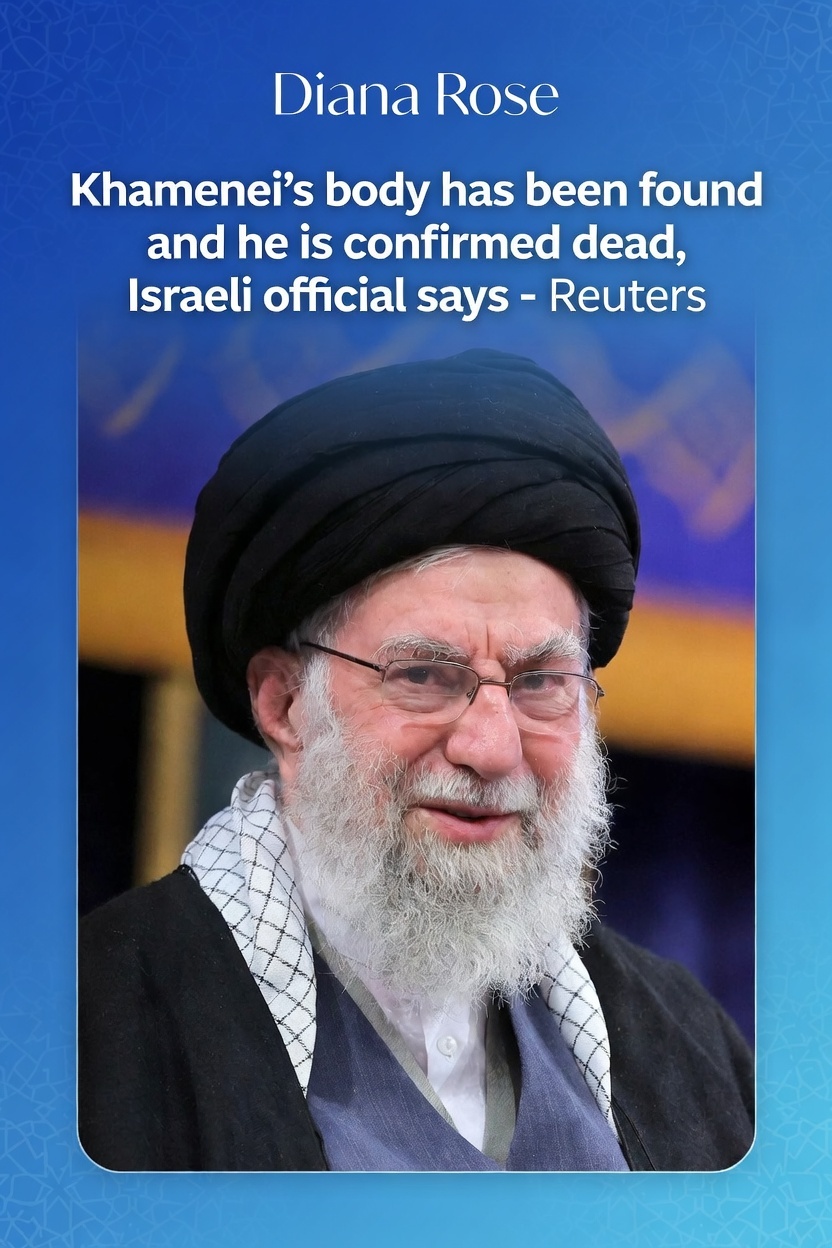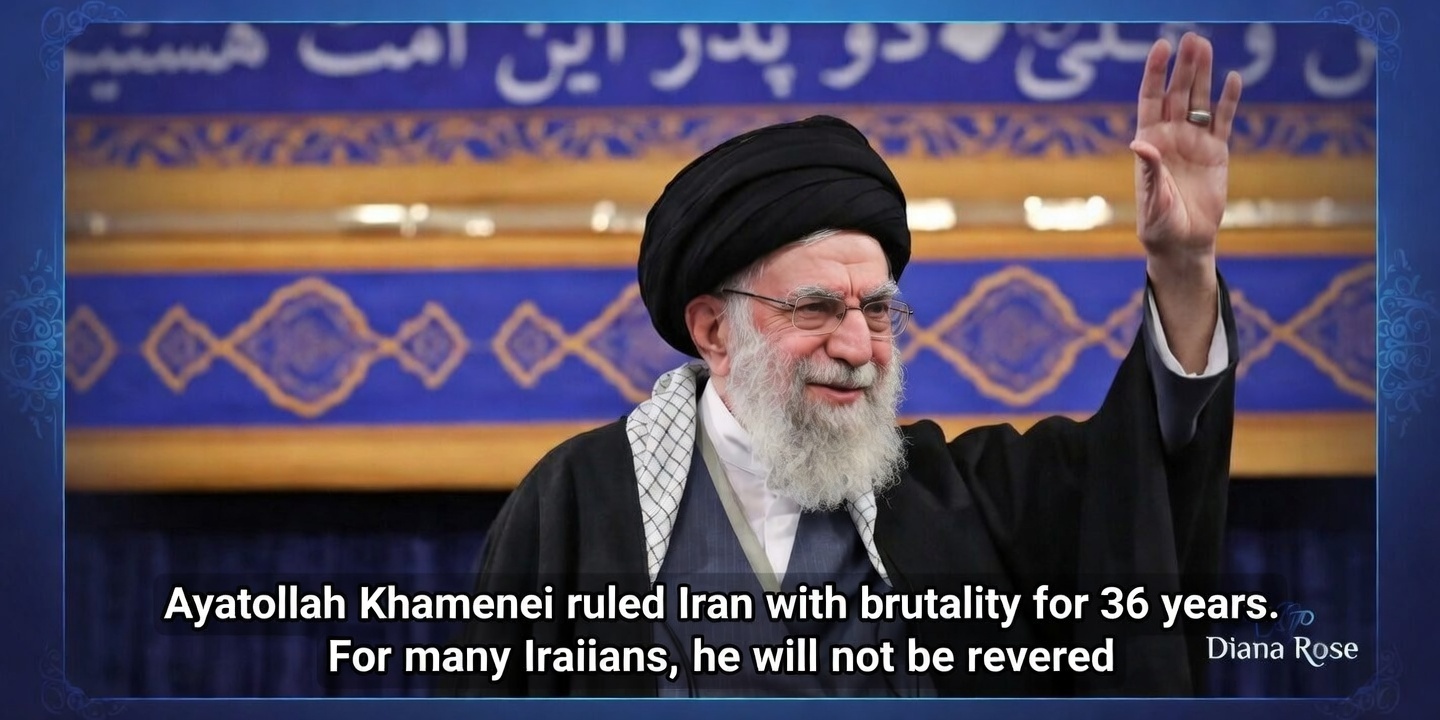
Ayatollah Ali Khamenei’s 36-Year Rule in Iran: A Controversial Legacy

Ayatollah Ali Khamenei, who led the Islamic Republic of Iran for 36 years as Supreme Leader, has been killed in U.S. and Israeli airstrikes, Iranian state media reported. Despite his long tenure, the way many Iranians view his leadership is deeply divided — and for many, he will not be remembered with reverence.

Khamenei became one of the most powerful figures in modern Iranian history, inheriting the role after the death of Ayatollah Ruhollah Khomeini, the founder of the Islamic Republic. Over three decades, he built a system in which he had broad authority over Iran’s politics, security forces, judiciary, media, and foreign policy.

A Rise to Power

Born in Mashhad in 1939, Khamenei’s early life was shaped by religious studies in important Shi’a centres such as Qom and Najaf. He embraced the revolutionary ideology of Khomeini and worked closely with him during the struggle against the shah’s regime. After the 1979 Islamic Revolution, Khamenei climbed the ranks of power — becoming deputy defence minister, a key organiser of the Islamic Revolutionary Guard Corps (IRGC), and later president during the Iran–Iraq War.

When Khomeini died in 1989, there was no obvious successor, and some clerics questioned whether Khamenei had the religious credentials to lead. A constitutional referendum was held to adjust requirements for the position, and Khamenei was elevated to Supreme Leader — a role that granted him far greater authority than his predecessor.

Consolidating Control

Once in power, Khamenei used his constitutional powers to shape Iran’s domestic and foreign policies. He often overruled elected presidents when their agendas conflicted with his vision, weakening reformist and moderate voices. In key moments — such as the disputed 2009 presidential election — he backed crackdowns on protesters, leading to deaths and mass arrests.

Even when reformist political leaders won popular support, Khamenei frequently limited their influence, especially in negotiations with the West over sanctions and Iran’s economy. In the final years of his rule, growing unrest in Iran over economic hardship and political restrictions once again led to widespread protests, which his government suppressed harshly.

Domestic and Regional Impact

Under Khamenei, the state’s control widened. The Revolutionary Guard grew in power, and Iran’s foreign policy became deeply entangled with regional proxy groups like Hezbollah and others. While at times the regime engaged in negotiations, including over the nuclear program, it was also marked by staunch resistance to Western influence and regional conflict.

Despite the centralisation of authority, Khamenei was often seen by critics as prioritising regime survival over meaningful progress. His leadership coincided with economic difficulties, international isolation, and public frustration. Many Iranians view his decades in power not as a period of strength but as one of stagnation and repression — and when he died, mass mourning was not guaranteed as it was for his predecessor.

A Complex Legacy

Khamenei’s death marks the end of one of the most polarising eras in Iran’s modern political history. While some may honour his steadfastness, many ordinary Iranians are more likely to see his legacy in terms of the repression, limited freedoms, and hardships of the past decades. His leadership reshaped Iran, but it also left deep divisions within society and questions about the future direction of the country.

VIDEO EMERGES ONLINE WHERE MEN HAVE BOYCOTTED PARTIES

In recent years, some people have observed that in Kenya, women appear to be more visible in social spaces like clubs, concerts, and parties than men. While this perception may not reflect everyone’s experience, there are several social, economic, and cultural factors that could help explain why some Kenyan men seem to party less nowadays compared to women.

1. Economic Pressures on Men

One major factor is financial responsibility. In many Kenyan communities, men are traditionally expected to be providers. With the rising cost of living, unemployment, and economic uncertainty, many young men feel pressure to focus on earning money rather than spending it on entertainment.

Partying can be expensive—cover charges, drinks, transport, and outfits all add up. For men who feel responsible for supporting families, paying rent, or investing in business opportunities, nightlife may feel like a lower priority.

2. Changing Social Roles and Independence of Women

Over the years, women in Kenya have gained greater financial independence and social freedom. More women are employed, running businesses, or pursuing higher education. With their own income, many feel empowered to enjoy social spaces without relying on men to sponsor outings.

At the same time, social norms that once discouraged women from going out at night have gradually become less strict in urban areas. As a result, women may now appear more active in nightlife compared to previous generations.

3. Different Socializing Patterns

Men and women sometimes socialize differently. Some men may prefer:

  • Watching sports at home or in local hangouts
  • Gaming or online entertainment
  • Small gatherings with close friends rather than large parties

These activities are less visible on social media compared to clubbing or big events, which might create the impression that men are not partying at all.

4. Social Media Influence

Social media platforms highlight glamorous events, birthdays, brunches, and club nights—often shared more openly by women. This visibility can create a perception that women are partying more, even if men are attending similar events but posting less about them.

5. Mental Health and Lifestyle Shifts

Some young men are also becoming more focused on personal development—fitness, side hustles, investments, or skill-building. Others may be withdrawing from social scenes due to stress, financial strain, or mental health challenges. Instead of nightlife, they may choose quieter or more private ways to relax.

6. Safety and Reputation Concerns

Men may also be more cautious about nightlife due to concerns about:

  • Police crackdowns or curfews
  • Fights and insecurity in clubs
  • Protecting their reputation, especially if they hold professional roles

In some cases, women may attend events in groups, making them feel safer and more comfortable in social spaces.


A Balanced View

It’s important not to generalize. Many Kenyan men still enjoy nightlife, just as many women do not. Social behavior is influenced by age, income, location (urban vs. rural), personality, and personal values.

Rather than saying “Kenyan men don’t party anymore,” it may be more accurate to say that:

  • Social roles are shifting.
  • Economic realities are changing priorities.
  • Women’s visibility in public social spaces has increased.
  • Men and women may simply socialize in different ways.

Society continues to evolve, and how people choose to spend their free time evolves with it.

Iran’s Mourning Crowds Chant ‘Death to America’ — Is This Grief or the Spark for Total War?

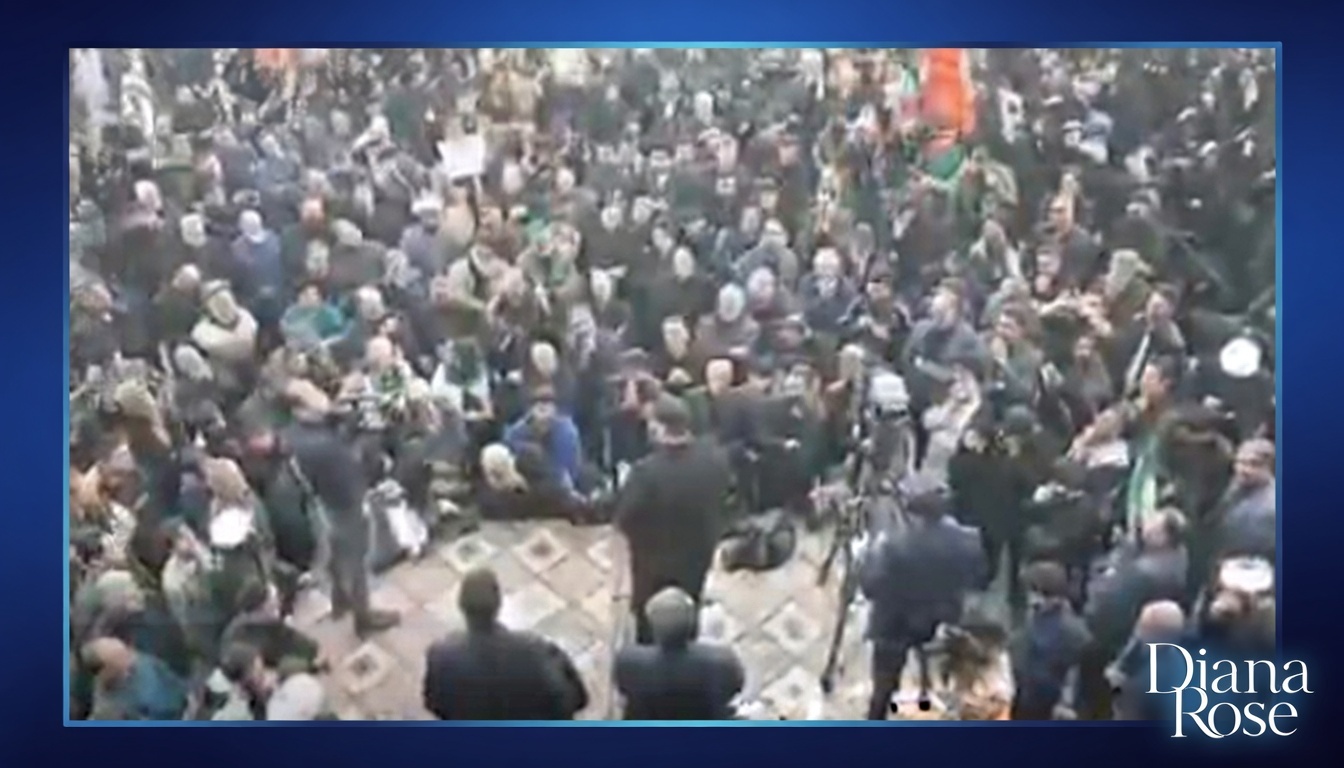
The death of Ayatollah Ali Khamenei, Iran’s Supreme Leader since 1989, marks one of the most seismic shifts in the Middle East in decades. Confirmed by Iranian state media on March 1, 2026, following joint U.S.-Israeli airstrikes on February 28, his killing has plunged the Islamic Republic into mourning, uncertainty, and escalating conflict.Massive crowds of pro-regime supporters have gathered in cities like Tehran, Qom, Mashhad, and Isfahan. State television and eyewitness accounts describe tens of thousands filling squares, waving Iranian flags, holding posters of Khamenei, and chanting slogans such as “Death to America” and “Death to Israel.” These gatherings blend profound grief with furious calls for revenge, framing the supreme leader’s death as “martyrdom” in the line of duty. Iranian authorities declared 40 days of national mourning and seven public holidays, underscoring the regime’s effort to rally loyalty around his legacy.Yet the public response reveals Iran’s deep divisions. While regime loyalists mourn, videos from Tehran, Karaj, and other areas show celebrations—fireworks, dancing, honking cars, and chants of “freedom”—from those who view his death as liberation after decades of repression, economic hardship, and crackdowns on dissent. This split highlights the fragility beneath the surface of state-orchestrated unity.The immediate danger lies in how these pro-regime crowds—often mobilized by the Islamic Revolutionary Guard Corps (IRGC) and Basij militias—translate their grief and rage into action. Khamenei’s rule was built on anti-Western ideology, proxy networks (Hezbollah, Houthis, Iraqi militias), and vows of retribution against perceived enemies. His supporters, steeped in this narrative, see the strikes as an existential assault on the Islamic Revolution itself.Iran has already launched missile and drone barrages at Israel and U.S. bases across the Gulf, Iraq, Jordan, and beyond, vowing an unprecedented response. Hardline elements within the IRGC and clerical establishment may push for even more aggressive escalation to restore deterrence and honor the “martyr.” Retaliation could take multiple forms:Intensified proxy attacks on U.S. forces and Israeli interests, potentially drawing in Lebanon, Yemen, Iraq, and Syria.
Direct strikes on regional energy infrastructure, risking global oil shocks.
Cyber or asymmetric operations targeting American, Israeli, or allied assets worldwide.
Heightened internal repression to crush any perceived celebrations or dissent, which could spark counter-protests and further destabilize the regime.

A leadership vacuum compounds the risk. No clear successor exists; interim authority falls to figures like the president, judiciary head, and a Guardian Council jurist, while the Assembly of Experts prepares to select a new supreme leader—possibly Khamenei’s son Mojtaba or another hardliner. Until then, competing factions may vie for influence, with hardliners advocating maximum retaliation to consolidate power.The cycle of mourning turning to vengeance threatens a broader regional war. Pro-regime forces, feeling humiliated by the decapitation strike, may act independently or with tacit approval from fragmented command structures. This could spiral beyond Iran’s control, pulling in more actors and raising the stakes for civilians across the region.As crowds chant for revenge, the world watches a grieving nation at a crossroads: whether sorrow fuels de-escalation through diplomacy or ignites a devastating chain of retribution. The coming days and weeks will determine if Khamenei’s death ends an era—or begins a far more dangerous one.

🔎 Inside the Intelligence Game: How the U.S. Could Track a Leader Like Khamenei — And What We Actually Know

In recent days, online rumors and speculative posts have circulated claiming that Ali Khamenei was located and killed in a covert U.S. operation.

As of now, however, there is no verified or credible confirmation from international news agencies or official government statements supporting those claims.

Still, the discussion has sparked global curiosity: If a high-profile leader were ever tracked by a foreign power, how would that even happen? And how does modern intelligence make such operations possible?

Let’s break down the real-world mechanics — without the conspiracy theories.


🌍 The Intelligence Infrastructure Behind Modern Surveillance

When people ask how the United States might locate a high-profile foreign leader, the answer lies in a vast intelligence network built over decades.

Agencies such as the Central Intelligence Agency and the National Security Agency specialize in gathering and analyzing information globally.

Their capabilities generally fall into several categories:

1️⃣ Signals Intelligence (SIGINT)

This involves intercepting communications — phone calls, satellite transmissions, encrypted messages, and digital traffic. Even heavily guarded leaders rely on communications infrastructure, which can leave digital traces.

2️⃣ Human Intelligence (HUMINT)

Human sources on the ground — informants, defectors, or insiders — often provide critical insights into movements, meeting locations, or security routines.

3️⃣ Satellite and Geospatial Surveillance

Advanced satellite systems can monitor facilities, vehicle movements, and even unusual activity patterns. Persistent surveillance makes it difficult for major movements to go unnoticed.

4️⃣ Cyber Intelligence

Modern intelligence operations often include cyber monitoring. Tracking digital footprints, device signatures, or cybersecurity vulnerabilities can sometimes reveal location data indirectly.


🛰 Why Tracking a Leader Is Extremely Difficult

Leaders like Khamenei operate under intense security protocols in Iran. These may include:

  • Restricted public appearances
  • Frequent location changes
  • Communication compartmentalization
  • Heavy counterintelligence operations

In practice, locating such a figure would likely require a combination of intelligence sources rather than a single “breakthrough moment.”


⚖️ The Reality of Modern Geopolitics

It’s important to separate online speculation from verified reporting.

High-profile targeted operations in the past — involving military commanders or militant leaders — have typically been acknowledged by governments after the fact. They also tend to follow long periods of surveillance and political calculation.

As of this writing, there has been no official confirmation from Washington, Tehran, or reputable international outlets suggesting that such an event involving Khamenei has occurred.


📢 Why These Rumors Spread So Fast

In today’s digital age:

  • Breaking news spreads instantly
  • Unverified posts can trend within minutes
  • Geopolitical tensions amplify speculation

Given longstanding tensions between the U.S. and Iran, dramatic claims can quickly gain traction online — even without factual backing.


🧠 The Bigger Picture

Whether discussing intelligence capabilities or global power dynamics, one thing is clear: modern surveillance and geopolitical strategy are far more complex than what viral headlines suggest.

For readers, the key takeaway is this:
Before sharing or reacting to major geopolitical claims, look for confirmation from established news organizations or official government sources.

In a world of instant information, critical thinking remains the most powerful tool of all.