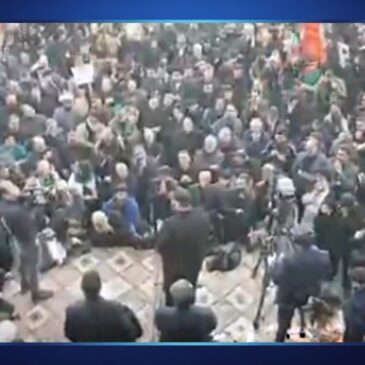
The death of Ayatollah Ali Khamenei, Iran’s Supreme Leader since 1989, marks one of the most seismic shifts in the Middle East in decades. Confirmed by Iranian state media on March 1, 2026, following joint U.S.-Israeli airstrikes on February 28, his killing has plunged the Islamic Republic into mourning, uncertainty, and escalating conflict.Massive crowds of pro-regime supporters have gathered in cities like Tehran, Qom, Mashhad, and Isfahan. State television and eyewitness accounts describe tens of thousands filling squares, waving Iranian flags, holding posters of Khamenei, and chanting slogans such as “Death to America” and “Death to Israel.” These gatherings blend profound grief with furious calls for revenge, framing the supreme leader’s death as “martyrdom” in the line of duty. Iranian authorities declared 40 days of national mourning and seven public holidays, underscoring the regime’s effort to rally loyalty around his legacy.Yet the public response reveals Iran’s deep divisions. While regime loyalists mourn, videos from Tehran, Karaj, and other areas show celebrations—fireworks, dancing, honking cars, and chants of “freedom”—from those who view his death as liberation after decades of repression, economic hardship, and crackdowns on dissent. This split highlights the fragility beneath the surface of state-orchestrated unity.The immediate danger lies in how these pro-regime crowds—often mobilized by the Islamic Revolutionary Guard Corps (IRGC) and Basij militias—translate their grief and rage into action. Khamenei’s rule was built on anti-Western ideology, proxy networks (Hezbollah, Houthis, Iraqi militias), and vows of retribution against perceived enemies. His supporters, steeped in this narrative, see the strikes as an existential assault on the Islamic Revolution itself.Iran has already launched missile and drone barrages at Israel and U.S. bases across the Gulf, Iraq, Jordan, and beyond, vowing an unprecedented response. Hardline elements within the IRGC and clerical establishment may push for even more aggressive escalation to restore deterrence and honor the “martyr.” Retaliation could take multiple forms:Intensified proxy attacks on U.S. forces and Israeli interests, potentially drawing in Lebanon, Yemen, Iraq, and Syria.
Direct strikes on regional energy infrastructure, risking global oil shocks.
Cyber or asymmetric operations targeting American, Israeli, or allied assets worldwide.
Heightened internal repression to crush any perceived celebrations or dissent, which could spark counter-protests and further destabilize the regime.
A leadership vacuum compounds the risk. No clear successor exists; interim authority falls to figures like the president, judiciary head, and a Guardian Council jurist, while the Assembly of Experts prepares to select a new supreme leader—possibly Khamenei’s son Mojtaba or another hardliner. Until then, competing factions may vie for influence, with hardliners advocating maximum retaliation to consolidate power.The cycle of mourning turning to vengeance threatens a broader regional war. Pro-regime forces, feeling humiliated by the decapitation strike, may act independently or with tacit approval from fragmented command structures. This could spiral beyond Iran’s control, pulling in more actors and raising the stakes for civilians across the region.As crowds chant for revenge, the world watches a grieving nation at a crossroads: whether sorrow fuels de-escalation through diplomacy or ignites a devastating chain of retribution. The coming days and weeks will determine if Khamenei’s death ends an era—or begins a far more dangerous one.