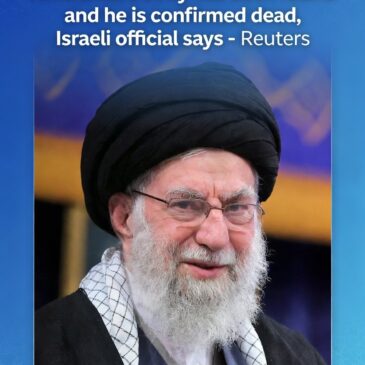
In recent days, online rumors and speculative posts have circulated claiming that Ali Khamenei was located and killed in a covert U.S. operation.
As of now, however, there is no verified or credible confirmation from international news agencies or official government statements supporting those claims.
Still, the discussion has sparked global curiosity: If a high-profile leader were ever tracked by a foreign power, how would that even happen? And how does modern intelligence make such operations possible?
Let’s break down the real-world mechanics — without the conspiracy theories.
🌍 The Intelligence Infrastructure Behind Modern Surveillance
When people ask how the United States might locate a high-profile foreign leader, the answer lies in a vast intelligence network built over decades.
Agencies such as the Central Intelligence Agency and the National Security Agency specialize in gathering and analyzing information globally.
Their capabilities generally fall into several categories:
1️⃣ Signals Intelligence (SIGINT)
This involves intercepting communications — phone calls, satellite transmissions, encrypted messages, and digital traffic. Even heavily guarded leaders rely on communications infrastructure, which can leave digital traces.
2️⃣ Human Intelligence (HUMINT)
Human sources on the ground — informants, defectors, or insiders — often provide critical insights into movements, meeting locations, or security routines.
3️⃣ Satellite and Geospatial Surveillance
Advanced satellite systems can monitor facilities, vehicle movements, and even unusual activity patterns. Persistent surveillance makes it difficult for major movements to go unnoticed.
4️⃣ Cyber Intelligence
Modern intelligence operations often include cyber monitoring. Tracking digital footprints, device signatures, or cybersecurity vulnerabilities can sometimes reveal location data indirectly.
🛰 Why Tracking a Leader Is Extremely Difficult
Leaders like Khamenei operate under intense security protocols in Iran. These may include:
- Restricted public appearances
- Frequent location changes
- Communication compartmentalization
- Heavy counterintelligence operations
In practice, locating such a figure would likely require a combination of intelligence sources rather than a single “breakthrough moment.”
⚖️ The Reality of Modern Geopolitics
It’s important to separate online speculation from verified reporting.
High-profile targeted operations in the past — involving military commanders or militant leaders — have typically been acknowledged by governments after the fact. They also tend to follow long periods of surveillance and political calculation.
As of this writing, there has been no official confirmation from Washington, Tehran, or reputable international outlets suggesting that such an event involving Khamenei has occurred.
📢 Why These Rumors Spread So Fast
In today’s digital age:
- Breaking news spreads instantly
- Unverified posts can trend within minutes
- Geopolitical tensions amplify speculation
Given longstanding tensions between the U.S. and Iran, dramatic claims can quickly gain traction online — even without factual backing.
🧠 The Bigger Picture
Whether discussing intelligence capabilities or global power dynamics, one thing is clear: modern surveillance and geopolitical strategy are far more complex than what viral headlines suggest.
For readers, the key takeaway is this:
Before sharing or reacting to major geopolitical claims, look for confirmation from established news organizations or official government sources.
In a world of instant information, critical thinking remains the most powerful tool of all.