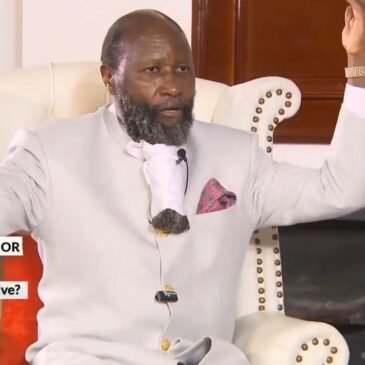
Here’s a balanced, informative, and up-to-date article you can use about Prophet Owuor’s latest controversies in Kenya — written in a clear, engaging style suitable for blogs or news sites:
Prophet David Owuor in the Spotlight: Unpacking the Latest Controversies
Prophet Dr. David Owuor, leader of the Repentance and Holiness Ministry and one of Kenya’s most talked-about religious figures, has once again found himself at the center of public debate and controversy. Known for his large crusades and dramatic claims of miraculous healings, Owuor’s ministry consistently attracts both devoted followers and vocal critics.
In early 2026, multiple issues thrust the preacher back into the news. One major flashpoint involved remarks by Kenya’s Health Cabinet Secretary Aden Duale, who suggested that Owuor had traveled abroad for medical knee surgery — an accusation the prophet’s ministry denied, calling the claims “false, unverified, and misleading.” The church explained that Owuor was on official religious duties during the period in question, pushing back against the suggestion that he sought medical care despite preaching faith-based healing.
Adding to the buzz was a viral miracle healing claim connected to one of Owuor’s events, where a businessman named Michael Makarina said he was healed and no longer needed his wheelchair. This prompted public commentary from Nairobi County officials, who jokingly questioned the whereabouts of the wheelchair — highlighting how quickly such claims can spark online debate and skepticism.
Beyond individual anecdotes, broader concerns have also surfaced. The Kenya Medical Practitioners and Dentists Council (KMPDC) is investigating unverified “miracle healing” claims associated with Owuor’s crusades. Meanwhile, the National Council of Churches of Kenya (NCCK) has distanced itself from some of Owuor’s practices, emphasizing that while faith and prayer are important, believers should not be discouraged from seeking verified medical treatment when necessary.
This recent spate of controversies sits alongside earlier ones — for example, the ministry previously had to publicly deny rumors about predicting a specific doomsday date, clarifying that Owuor never set an exact end-of-world date despite viral social media posts suggesting otherwise.
Critics located outside mainstream media have also shared stories and allegations about internal practices and unverified claims, though these are harder to substantiate. Independent voices online argue that some reported miracles lack scientific proof, while supporters defend Owuor’s ministry as a source of spiritual encouragement. Regardless of perspective, these debates reflect a broader tension in Kenya today between faith-based healing and public health standards.
What remains clear is that Prophet Owuor’s influence — and controversies — continue to generate conversation across social media, traditional news outlets, and within Kenyan society at large. Whether one views him as a spiritual leader or a polarizing public figure, the ongoing discussions highlight the importance of critical dialogue around religion, evidence, and community expectations in the digital age.