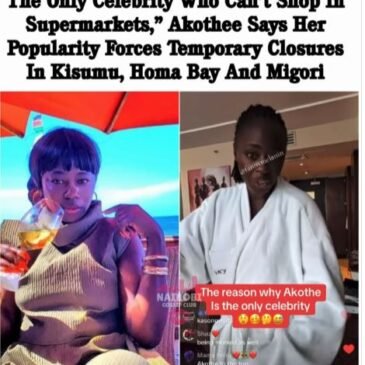
A recent video by Kenyan entertainer Akothee, in which she suggested that supermarkets are closed to the public so she can shop first, has sparked heated debate online. While some fans brushed it off as exaggeration or confidence, many others saw the remarks as revealing a troubling mindset about status, power, and society.
1. Celebrity Should Never Mean Superiority
In modern, democratic societies, fame is not meant to place someone above ordinary citizens. Supermarkets, hospitals, roads, and public spaces exist to serve everyone equally. The idea that “common people” should be pushed aside so a celebrity can shop comfortably feels outdated and elitist.
Rather than inspiring admiration, such thinking reminds people of eras when privilege was inherited or enforced — not earned through mutual respect.
2. Success Without Humility Alienates the Public
Many Kenyans celebrate success stories, especially those that rise from humble beginnings. But when success is framed as a license to inconvenience others, it quickly turns admiration into resentment.
Public figures are influential not just because of wealth or fame, but because of how they relate to ordinary people. When that connection is lost, so is public goodwill.
3. Why People Begin Questioning Judgment, Not Just Character
It’s not the claim itself that has drawn criticism, but the thinking behind it. Many online commenters are asking:
- Why would anyone believe such treatment is normal or acceptable?
- Why present exclusion as something to boast about?
- Why frame other citizens as “common” in a shared society?
These questions lead people to question the reasoning and judgment behind the statement — not academic intelligence, but social awareness and emotional intelligence.
4. Modern Leadership Is About Access, Not Barriers
Globally, respected leaders and celebrities increasingly do the opposite: they queue, interact freely, and emphasize equality. This is because modern influence is built on relatability, not separation.
Any mentality that celebrates barriers between people — especially in everyday spaces like supermarkets — feels disconnected from where society is heading.
5. Words Matter More Than Ever
In the age of social media, statements are no longer just personal opinions; they shape public narratives. When influential figures speak, they either reinforce values of equality or reopen wounds around classism and exclusion.
This is why such remarks don’t just entertain — they provoke serious reflection.
Conclusion
Confidence is powerful. Success is admirable. But when confidence turns into perceived superiority, it stops being inspirational and starts raising uncomfortable questions.
Kenyans are not rejecting success — they are rejecting the idea that fame makes someone more human than others.